
Vitamin B3 is one of the most studied ingredients in skincare, and one of the most misunderstood. It is sold as a fix for almost everything. The evidence supports something more specific: niacinamide helps skin do its own job better. This guide explains what it is, what it does on skin, and how Dr Alison Jamieson places it in a protocol.
What is vitamin B3?
Vitamin B3 is a water-soluble vitamin. In skincare it almost always appears as niacinamide, also called nicotinamide. The two names describe the same molecule. Niacin (nicotinic acid) is a different form of vitamin B3 and is not what you will find in a well-formulated serum.
Your body also takes in vitamin B3 through food, including yeast, lean meat, fish, nuts and legumes. Applied to the skin, niacinamide reaches the skin directly and at a concentration food cannot provide.
Is niacinamide the same as vitamin B3?
Yes. Niacinamide is one form of vitamin B3, and it is the form used on skin. When a label says "vitamin B3" or "nicotinamide", it means niacinamide.
What does vitamin B3 do for skin?
Niacinamide is not a single-purpose ingredient. It supports several parts of skin function at once, which is why it appears across more than one product in the Aliangé protocol.
Barrier function
The skin barrier holds water in and keeps irritants out. Ceramides, the lipids that sit between skin cells, are central to it. Niacinamide supports the skin's own production of ceramides, rather than coating the surface with borrowed lipids. A stronger barrier is the foundation the rest of a protocol depends on. For the full mechanism, read Clinical Notes Vol. 7: your skin barrier is an ecosystem.
Hydration
When the barrier works properly, less water escapes through the skin. This is measured as transepidermal water loss. Niacinamide has evidence supporting a reduction in water loss, so skin holds its own moisture better. This is different from a moisturiser adding water on top. The hydration comes from a barrier that is functioning.
Oil and the look of pores
Niacinamide helps regulate the appearance of excess oil and shine. Pores look larger when they are congested with oil, so better oil balance also supports a refined look to skin texture. This is one reason niacinamide is well suited to combination and oily skin that reacts badly to stripping products.
Tone and redness
Niacinamide supports a more even-looking skin tone. It does not stop your skin making pigment. It works later in the process, by reducing how much pigment is delivered to the surface cells you see. We explain that step in Niacinamide doesn't stop melanin. It hijacks the delivery system.
A well-supported barrier is also less reactive. Skin that is calmer at baseline tends to show less visible redness and blotchiness over time.
Vitamin B3 serum or cream?
Both can work. The format matters less than the formula around it.
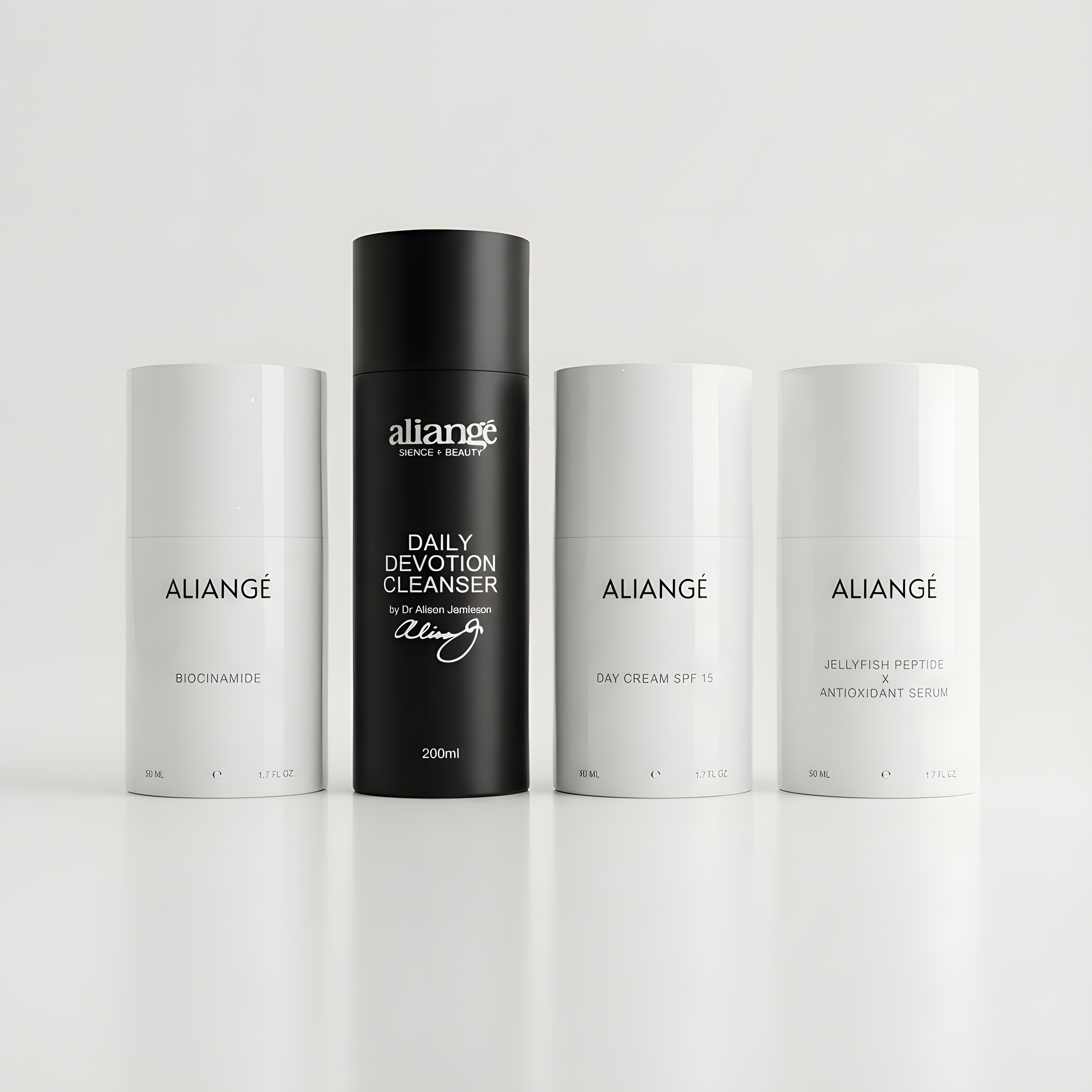
A serum is light and sits close to the skin, so it suits morning use under moisturiser and make-up. A cream adds emollients and suits drier skin or night use. In the Aliangé protocol, niacinamide appears in a serum, the Biocinamide Serum, and alongside other actives in products such as the Brightening Serum.
Biocinamide Serum pairs niacinamide with ferment and lipid ingredients built around the barrier, plus bisabolol for reactive skin. Read why in Bisabolol: the calming ingredient working quietly in Biocinamide Serum.
How to use niacinamide with other actives
Niacinamide is well tolerated and combines easily. That is a large part of its value.
Morning (AM)
Cleanse, then apply your niacinamide serum to dry skin before any targeted serum and moisturiser. Finish with a broad-spectrum sunscreen every morning. Queensland sun undoes a great deal of good barrier work, and niacinamide is not a sunscreen.
Evening (PM)
Cleanse, then apply niacinamide first. Layer retinol, acids or other targeted treatments after it. Niacinamide's barrier support can make stronger actives easier to tolerate.
With retinol
Niacinamide and retinol sit well together. Many people who find retinol drying tolerate it better with a barrier-supporting step underneath. Read more in A closer look at vitamin A, or see Ultimate A Night Cream.
With vitamin C and AHAs
The old advice that niacinamide and vitamin C cancel each other out is not a reason to avoid using both. If your skin is sensitive, use them at different times of day, or give your skin a few minutes between layers. Use SPF the morning after any AHA or retinol.
For the order Dr Alison Jamieson prescribes, see The Protocol and the PM Protocol.
Who is vitamin B3 for?
Niacinamide suits most skin types. It is a sensible first active for:
- Combination or oily skin that wants oil balance without stripping
- Skin with a compromised or easily irritated barrier
- Uneven-looking tone, alongside a complete brightening protocol
- Anyone who finds retinol or acids hard to tolerate and wants a gentler foundation step
Cautions and sensitive skin
Niacinamide is well tolerated, but any new product can cause a reaction. Patch test first: apply a small amount to the side of the neck or inner forearm once a day for a few days before using it on your face.
Some people notice brief flushing or tingling, especially on a compromised barrier. If your skin is sensitive or reactive:
- Introduce it every second day for the first one to two weeks
- Apply it to dry skin, not straight after cleansing on damp skin
- Do not start niacinamide at the same time as a new retinol or acid. Add one active at a time.
Stop using it if you notice persistent redness, stinging or a rash. If redness persists despite consistent barrier support, it is worth a professional assessment. Read how barrier-driven redness actually works.
Niacinamide supports the appearance and function of skin. It does not treat skin disease. Persistent acne, rosacea or any changing skin lesion needs assessment by your doctor.
How long does niacinamide take to work?
Skin renews itself over several weeks. Give any niacinamide product consistent daily use for at least six to eight weeks before judging it. Oil and texture changes often show first. Tone is slower, because pigment already in the surface cells has to shed.
Frequently asked questions
What are the benefits of vitamin B3 serum?
A vitamin B3 serum supports barrier function and hydration, helps regulate the look of oil and pores, and supports a more even-looking tone. A serum format is light enough to wear every morning under make-up.
Is vitamin B3 good for your face?
Yes, for most skin types. Niacinamide is well tolerated and combines easily with other actives. Patch test first if your skin is sensitive.
Can I use vitamin B3 every day?
Yes. Niacinamide is designed for daily use, morning and evening. Sensitive skin can start every second day and build up.
Does vitamin B3 help acne-prone skin?
Niacinamide helps regulate the look of oil and supports a calmer barrier, which suits acne-prone skin as part of a protocol. It is not an acne treatment. Persistent or inflamed acne needs assessment by your doctor.
What is the difference between vitamin B3 and B5 for skin?
Vitamin B3 (niacinamide) supports ceramide production, oil balance and tone. Vitamin B5 (panthenol) is a humectant that draws water into the skin and soothes. They do different jobs and work well together.
The Aliangé approach
Niacinamide earns its place because it supports several skin functions without irritation. It works best as a foundation step, placed before the actives that do more targeted work. Dr Alison Jamieson, MBBS, FRACGP, Dip Derm, builds it into the protocol for exactly that reason.
Not sure where to start? Take the 60-second skin quiz to find the protocol indicated for your skin.



Leave a comment
This site is protected by hCaptcha and the hCaptcha Privacy Policy and Terms of Service apply.