
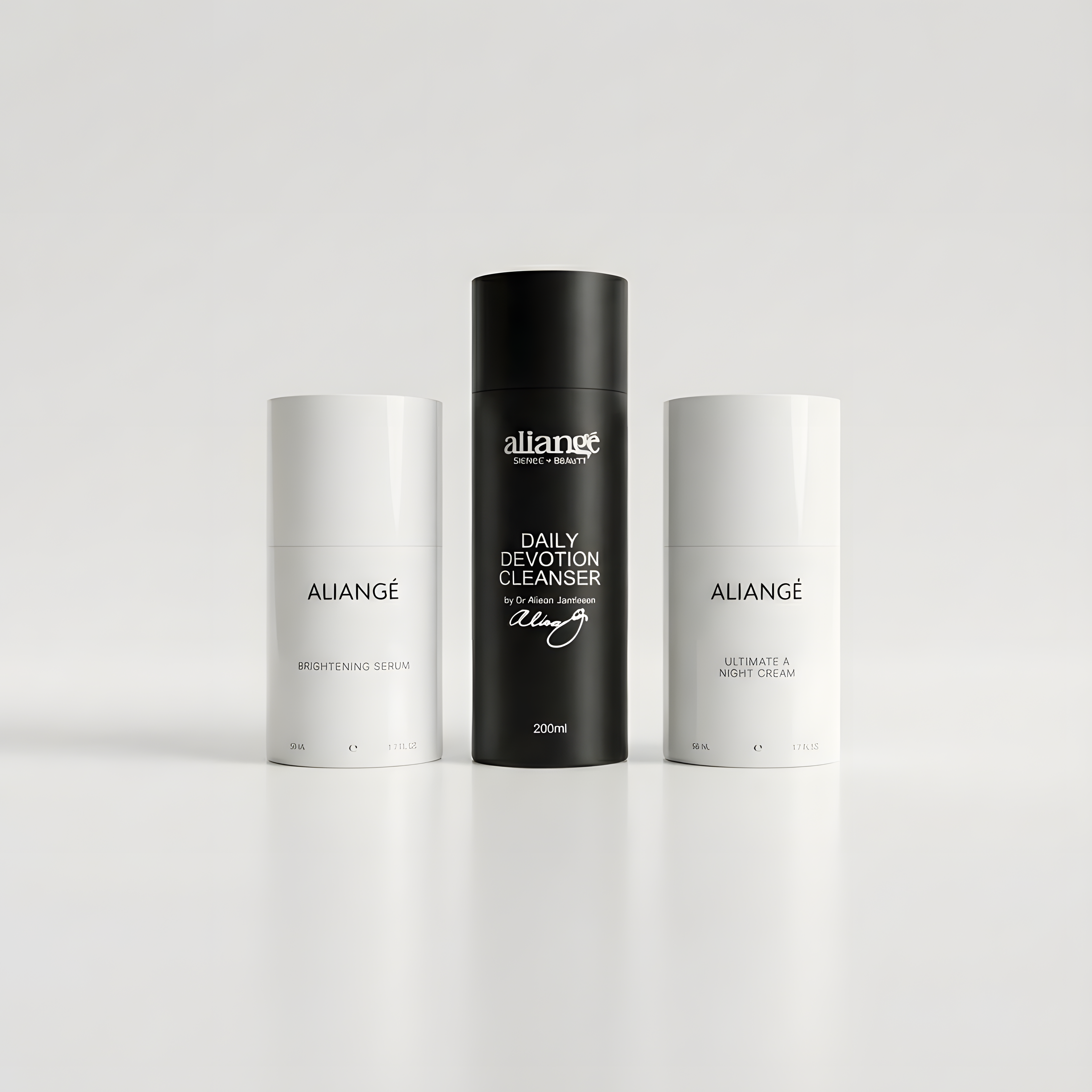

How Dr Jamieson Introduces a New Protocol: The First Five Weeks
Abstract
Most protocols that fail do so in the first month. In most cases the product was not the problem. The introduction was: every step started on the same night, at full frequency, with no way to tell what the skin was reacting to.
Dr Alison Jamieson, Cosmetic Physician, introduces a new protocol the way she would introduce any active treatment in clinic: one change at a time, in a fixed order, with a clear point at which to step back.
Why the first month decides the outcome
Retinol increases the rate of cell turnover. Skin that is new to a retinoid typically needs a period of adaptation, during which dryness, tightness or mild flaking is common and usually eases as tolerance builds. That adaptation period is expected. It is also the point at which most people stop.
The pattern is familiar to Dr Jamieson from more than 40 years of clinical practice. In her experience, patients who introduce a retinoid gradually are more likely to still be using it at three months than those who start at full frequency. A product used consistently for twelve weeks and a product abandoned in week two are not the same treatment, whatever the label says.
What a new protocol asks of your skin
Every new active asks the skin to adjust two things at once: how quickly it renews, and how well the barrier copes with that change. Gentle cleansing, barrier support and UV protection give the skin the capacity to adapt. Remove any of them and an active that would have been tolerated becomes irritating.
This is why Dr Jamieson assesses the barrier before the presenting concern, and why the introduction schedule is part of the protocol itself rather than an afterthought.
Step 1: Settle the Sun Protocol first
The Moon Protocol changes the skin. The Sun Protocol protects it while it changes, so it comes first.
Before any night-time active is added, the morning sequence should already be in place: cleanse, Biocinamide Serum for barrier support, then a day cream with SPF. Skin undergoing increased turnover is more vulnerable to UV damage, so daily SPF is essential during retinoid use. In Queensland, where UV is high for most of the year, this step is not optional.
The Biocinamide Serum stays in the evening sequence as well. It sits beneath the night cream and supports the barrier while the skin adapts.
Step 2: The five-week introduction
Dr Jamieson's schedule for the Ultimate A Night Cream is deliberately slow.
- Weeks 1 and 2: twice a week. Monday and Thursday evenings work well, because the gap between applications is long enough for the skin to recover.
- Weeks 3 and 4: every other night.
- Week 5 onward: nightly.
Apply a pea-sized amount after cleansing and serum, to the face, neck and décolletage. More product does not shorten the schedule. It lengthens the adaptation.
What to expect, and when to adjust
Mild dryness or flaking during the first weeks is the most common response, and it does not require stopping. Stay at the current stage rather than advancing, keep the Biocinamide Serum in place, and do not add anything new.
Redness or irritation that persists beyond 48 hours is the signal to step back. Step back one stage, hold it for a week, then advance again. Stepping back is part of the schedule. It is not a failure of the product or of the person using it.
For a fuller account of why consistency matters more than strength, see The Best Retinol Is the One You Keep Using.
Change one thing at a time
If a new night cream, a new exfoliant and a new brightening serum all start in the same week, a reaction cannot be traced. The skin has been given three variables and the person has been given no information.
The order in the PM Protocol exists for this reason. Establish the cleanse and barrier support first. Introduce the retinoid on the schedule above. Add further corrective steps only once nightly use is comfortable.
When a protocol is not the answer
A reaction that is spreading, blistering, swelling, or not settling after stepping back needs a doctor, not another adjustment. Retinol is also not used during pregnancy or breastfeeding. The signs that separate a protocol reaction from a medical one are set out in When Your Skin Needs a Doctor, Not a Protocol.
Common Questions
How long does skin take to adjust to a retinol night cream?
Dr Jamieson's schedule moves from twice weekly to nightly over five weeks. Adjustment varies between people. If the skin has not settled, hold at the current stage for another week before advancing.
Is flaking in the first few weeks normal?
Mild dryness or flaking can occur as turnover increases. Hold the current frequency and keep barrier support in place. If redness or irritation lasts beyond 48 hours, reduce frequency.
Do I still need SPF if I only use retinol at night?
Yes. The Sun Protocol finishes with SPF every morning, whether or not a retinoid is used the night before.
Can I start the whole protocol in the same week?
It is better not to. Settle the cleanse and the Sun Protocol first, then introduce the night cream on the schedule above. Add further corrective steps once nightly use is comfortable.
Your next step
The PM Protocol sequences each evening step in the order skin tolerates it. If you are unsure where to begin, the Skin Quiz follows the same assessment order Dr Jamieson uses in clinic.
Leave a comment
This site is protected by hCaptcha and the hCaptcha Privacy Policy and Terms of Service apply.